
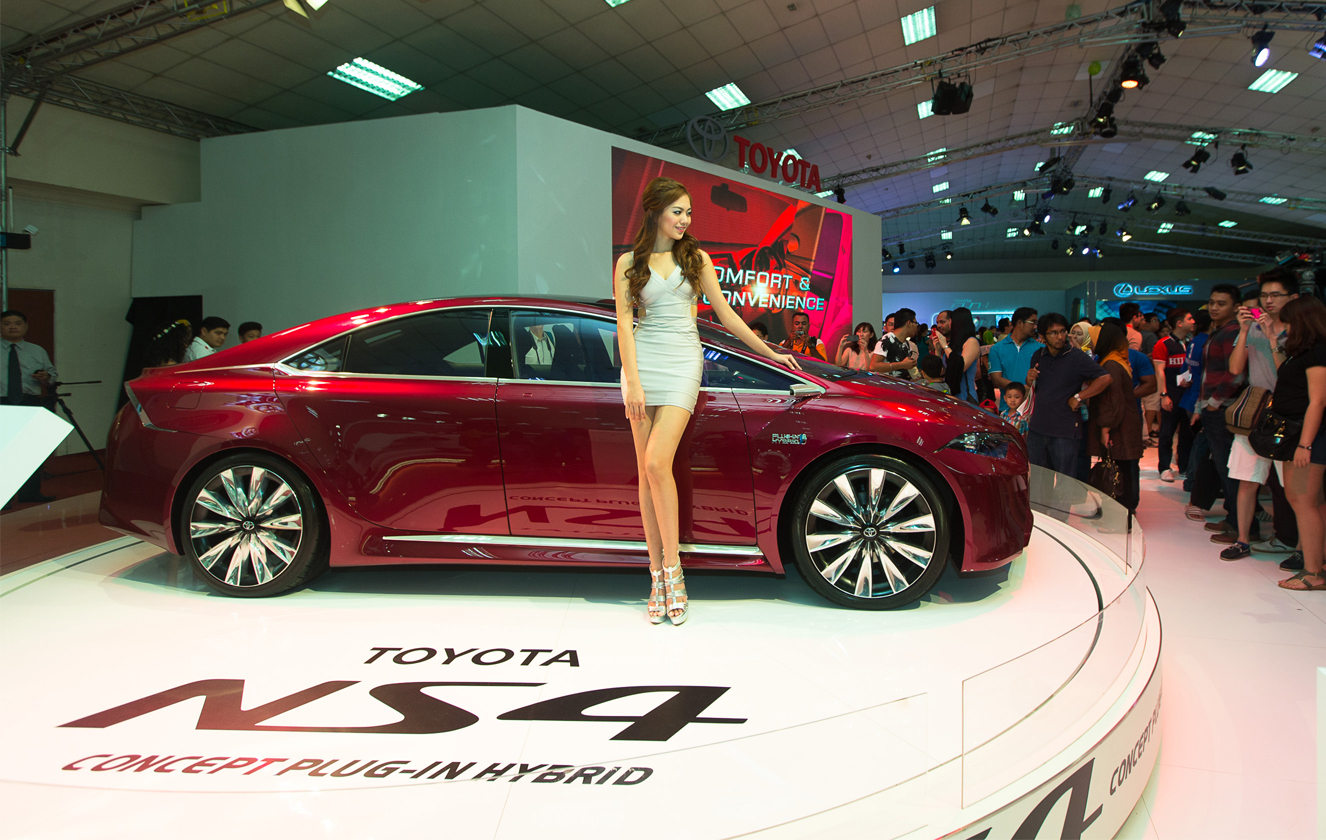
Malaysia, once the first carmaker in Southeast Asia, has a long history in the production of motor vehicles. At present the industry contributes an estimated 4% of Malaysia’s annual GDP, or around USD 8.4 billion and employs a workforce of over 700,000 people. Malaysia’s automotive sector is the third largest in Southeast Asia now and 23rd largest globally with an annual output of over 740,000 vehicles. Germain Thomas, Asian Insiders’ partner in Malaysia discusses opportunities available now to international operators and investors in Malaysia’s automotive sector.
Malaysia was one of Britain more prosperous overseas possessions, offering a rich supply of tin and rubber and conveniently located to major shipping routes, however as Malaysia gained independence the new government focused on developing an industrial base, seeking fast growth, inwards capital and speedy technology transfers. Malaysia’s automotive sector was one such industry and from the 1960’s moved into car assembly and production. By the 1980’s Malaysia had developed capacity sufficiently to have their own branded cars, firstly Proton, then Perodua, both developing a strong domestic market and exporting with some success.
Now, by 2024, it is a different landscape and Malaysia’s automotive sector operates in an altered context, however the underlying factors remain strong and the future looks bright for the sector. While the automotive industry contributes just 4% to the GDP annually, the government has launched the National Automotive Policy (NAP2020) that targets the sector to contribute 10% of GDP by 2030.
Through the Malaysian Investment Development Authority (MIDA), the government has introduced enhanced auto-industry incentives to encourage local expansion in car development and manufacture as well as improved performance and efficiency in the parts sector. This scheme remains open until December 2025 and until now has approved 13 projects of over USD 1.1 billion.
The governments’ New Industrial Master Plan (NIMP2030) aims to transform Malaysia into a high-tech industrialised nation with high-growth industries such as electronic, chemicals, aerospace and automotive manufacturing at the heart of the USD 20 billion strategic plan. In particular, the electrical vehicle sector is considered a high-impact sector under NIMP2030 and related policies in this category will be reviewed quarterly for maximum growth.
Domestic demand is a driving factor and this is supported by the growth in Malaysia’s middle class. Malaysia’s population in 2023 was 34.3 million with an annual growth rate of 1.09%. The defined middle class equals around 40% of that number. Rising incomes and increasing urbanisation has increased the need for personal and public vehicles and one aspect of the recent government initiatives has been to support the expansion of the vehicle finance sector by mandating cheaper loans through state banks, projected to lead to an additional one million new cars on Malaysian roads each year.
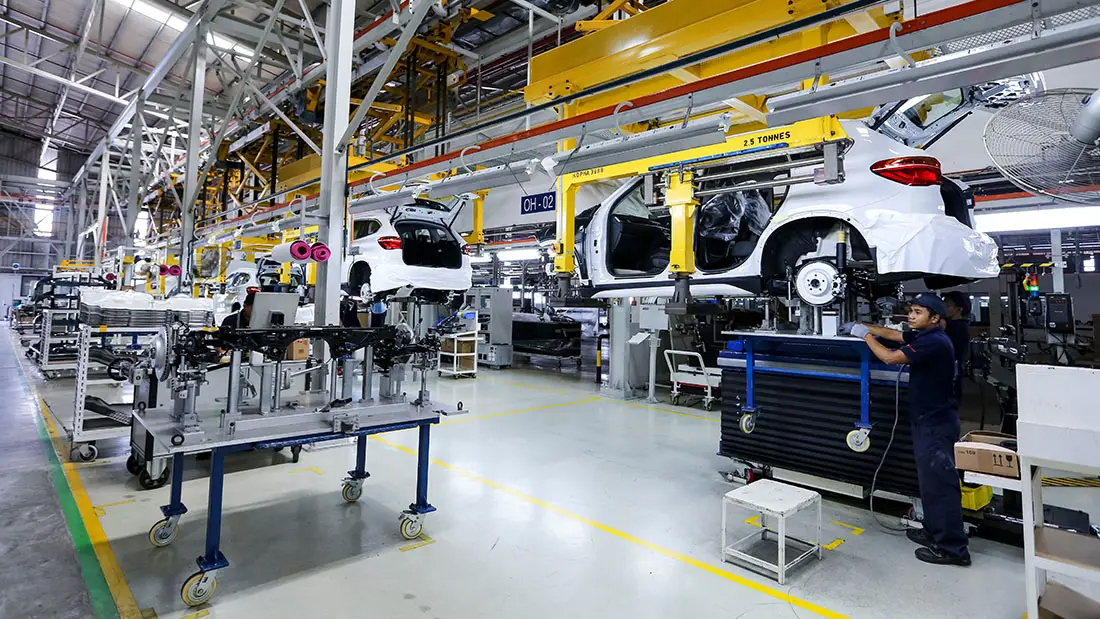
Malaysia’s automotive sector comprises of 28 vehicle manufacturing and assembly plants and over 640 component manufacturers. Both the organic Malaysian brands, Proton and Perodua are now essentially owned by international interests with their vehicle designs largely based on overseas models. In July last year, Chinese carmaker Geely, announced their investment of USD 10billion supported by Hicom, owner of Proton, to develop Tanjung Malim in Perak province into Malaysia’s largest auto city, Automotive High-Technology Valley (AHTV). The focus here will be to work with a range of brands and carmakers as well as the manufacture of high-tech components and parts for export and for the emerging EV sector and its attending infrastructure.
Perodua, owned by Toyota was Malaysia top selling brand in 2023 while Geely-owned Proton is also popular. Global manufacturers such as Honda, Toyota, Nissan, Mercedes-Benz, BMW, VW, Porsche, Jaguar and Peugeot maintain production facilities in Malaysia, with the intention of building production for the ever-expanding middle classes of Southeast Asia. International component manufacturers also, such as ZF, Delphi, Continental, Nippon Zayaku, PD Kawamura, Akashi Kikai, Denso and Bosch are also active in Malaysia’s automotive sector. Malaysia is making strong efforts to stay at the leading edge of research and development as the global trend moves towards digitisation and new business models. Malaysia is pushing towards trends such as diverse mobility, autonomous driving, electrification and digital connectivity that will shape driving over the next 15-20 years. MIDA has approved of over 50 projects within the Energy Efficient Vehicles (EEV) category, recognising the strong future shift towards electric.
NAP2020 is the government’s effort to build Malaysia as a regional leader in automotive design, engineering, technology and sustainable development and is actively seeking strategic partnerships in the area of Next-Generation Vehicles (NxGV). Companies in Malaysia’s automotive sector may avail themselves of various government facilities such as the Pioneer Status or Investment Tax Allowance incentives. MIDA is strengthening efforts to encourage further international investments in Malaysia’s automotive sector, enhancing technology and expertise transfer while ensuring Malaysia stays on the leading edge of vehicle design. With strong domestic demand along with proximity to other booming population centres, Malaysia offers an ideal base for further investment, development and production.
Asian Insiders offers expertise and experience in working with Malaysia’s automotive sector. To discuss investment, engagement and direct connection to opportunities in Malaysia, please contact Jari Hietala, Managing Partner: jari.hietala@asianinsider.com or Germain Thomas, Malaysia Partner: germain.thomas@asianinsiders.com







Georgia Reader Reply
Et rerum totam nisi. Molestiae vel quam dolorum vel voluptatem et et. Est ad aut sapiente quis molestiae est qui cum soluta. Vero aut rerum vel. Rerum quos laboriosam placeat ex qui. Sint qui facilis et.